Market Turmoil and Constitutional Debate as Trump Targets Fed Chair
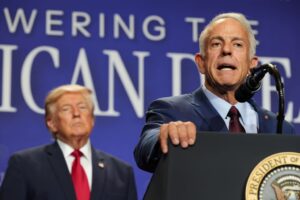
In a series of dramatic exchanges, President Trump has repeatedly threatened to dismiss Federal Reserve Chair Jerome Powell, prompting significant fluctuations in the stock market. The latest episode saw the Dow Jones Industrial Average plummet by more than 950 points following Trump’s threats, only to surge the next day after the president retracted his intentions.
Federal Reserve Chair Jerome Powell has warned that Trump’s proposed tariffs, dubbed “Liberation Day” tariffs, would likely lead to “higher inflation and slower growth.” According to Powell, the Federal Reserve would not be able to mitigate these effects. On Monday, President Trump criticized Powell, referring to him as “Mr. Too Late, a major loser,” and demanded immediate interest rate cuts.
While Trump insists he has the authority to terminate Powell, legal experts disagree, affirming that the president cannot lawfully remove the Fed chair without cause. This ongoing tension between Trump and Powell raises concerns of a potential financial and constitutional crisis.
Understanding the Federal Reserve’s Role
The Federal Reserve, established in 1913 in response to financial instability during the Gilded Age, serves as the United States’ central bank. Designed to operate independently from political influences, its mission is to maintain a stable financial system.
Historically, presidents have expressed dissatisfaction with the Fed. A notable example is Richard Nixon, who pressured the Fed to lower interest rates before his re-election bid in 1972. While the Fed did comply, it contributed to a decade of inflation. However, most presidents recognize the necessity of the Fed’s independence to counteract unchecked fiscal policies.
William McChesney Martin, a former Fed chair, famously described his role as, “I’m the fellow who takes away the punch bowl just when the party is getting good.” The Fed’s independence is legally protected by statutes such as the Federal Reserve Act, which stipulates that the chair serves a four-year term and can only be dismissed for cause.
Legal Precedents and Current Challenges
Trump’s assertion that he can fire Powell is rooted in a challenge to a longstanding Supreme Court ruling from 1935, known as Humphrey’s Executor. This case established that presidents could not dismiss the heads of independent agencies at will. Over the past 90 years, this ruling has safeguarded the autonomy of agencies intended to regulate markets and protect consumers.
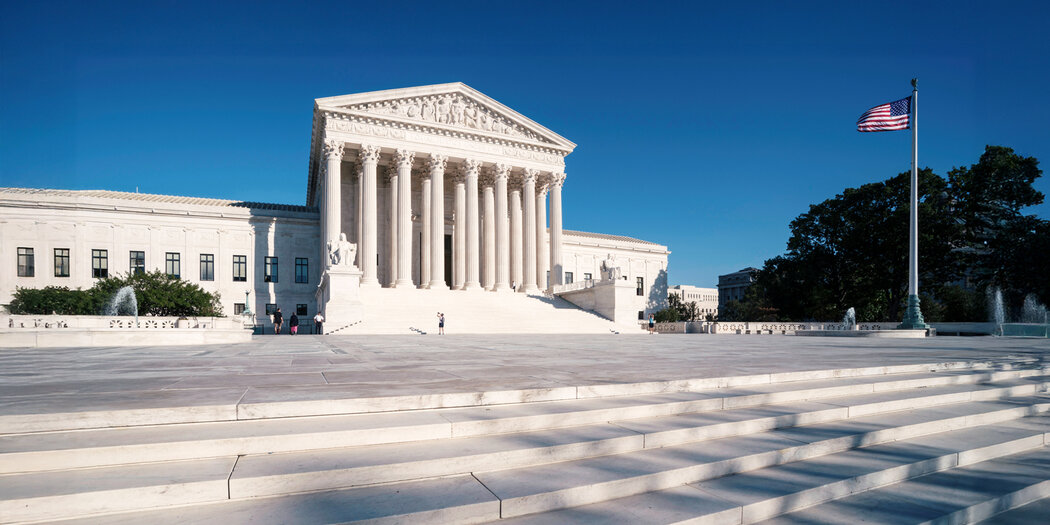
The current Supreme Court, with its conservative majority, has shown interest in revisiting this precedent. A case concerning the dismissal of the National Labor Relations Board’s head is set to prompt a re-evaluation of presidential authority over independent agencies.
If the Supreme Court decides to overturn Humphrey’s Executor, the implications could extend beyond agencies like the Federal Trade Commission and the Securities and Exchange Commission, potentially affecting the Federal Reserve as well.
Economic Consequences and Historical Context
If Trump proceeds to fire Powell, the economic repercussions could be dire. Market confidence could collapse, interest rates might spike, and the perceived stability provided by the Fed could be compromised. Such a scenario echoes historical events, such as the dismissal of France’s finance minister Jacques Necker by King Louis XVI, which contributed to the onset of the French Revolution.
In a recent footnote, Justice Samuel Alito noted, “The funding of the Federal Reserve Board should be regarded as a special arrangement sanctioned by history,” indicating a potential recognition of the Fed’s unique status.
As developments unfold, the debate over the balance of power between the executive branch and independent agencies continues, with significant economic and political implications hanging in the balance.