Far-Right Militancy and White Supremacist Activity in the Spotlight as Trump Enters Second Term
The commencement of President Trump’s second term has prompted a resurgence of celebrations among white supremacists and far-right militants, akin to the events following his 2016 election victory. During that period, Richard Spencer and 200 white nationalists gathered at the Ronald Reagan Building in Washington, DC, many displaying Nazi salutes while Spencer chanted, “Hail Trump, hail our people, hail victory!”
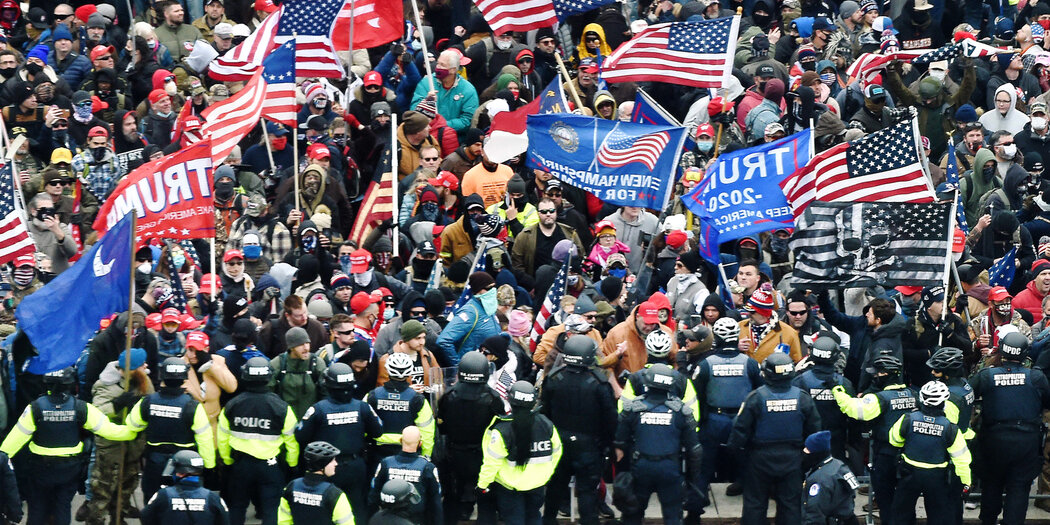
The rise of far-right militancy during Trump’s initial term was marked by numerous violent incidents across the United States, posing a significant threat to democratic institutions. Notable events include violent outbreaks in Virginia, Texas, and California, culminating in the January 6, 2021, attack on the U.S. Capitol by groups like the Proud Boys and Oath Keepers. While some Trump-supporting police officers participated, the majority of law enforcement resisted and later aided in prosecuting the attackers.
Trump’s blanket pardon of individuals involved in the January 6 insurrection has been viewed as a betrayal of law enforcement, increasing the risk faced by police officers, government officials, journalists, and communities nationwide. This action underscores the need for law enforcement to learn from previous experiences with far-right militancy during Trump’s first term.
The Charlottesville Rally and Historical Lessons
In 2016, Richard Spencer’s newfound media attention helped organize the 2017 Unite the Right rally in Charlottesville, Virginia. This event aimed to unite various factions of the white supremacist movement, resulting in planned violence. The historical use of public demonstrations to provoke violence by Nazi Party leaders during the Weimar Republic serves as a lesson that was overlooked by law enforcement in Charlottesville, leading to a deadly vehicle attack during the rally.
The failure to effectively police the violence in Charlottesville emboldened white supremacists and far-right militants, allowing them to build networks for organized violence across the nation. This lack of enforcement facilitated threats and attacks on local communities in various cities.
Law Enforcement Challenges and Community Response
Far-right militants have often presented themselves as allies of law enforcement, yet the events of January 6 revealed their true intentions, with over 140 officers injured and one fatality. Trump’s pardon of the insurrectionists further highlights the challenges law enforcement faces in addressing this threat.
State and local law enforcement must independently gather intelligence on these groups, understanding their tactics and legal authorities to combat such crimes. It’s crucial for police departments to investigate and prosecute white supremacist violence, while communities hold them accountable and explore alternative justice and violence reduction methods.
Community organization and activism play a crucial role in countering far-right threats. Anti-racism activists, investigative journalists, and civil lawsuits have proven effective in disrupting these groups and holding them accountable in court.
Consequences for Far-Right Militants
Richard Spencer’s decline in influence, alongside legal actions against white supremacists, serves as a cautionary tale for those aligning with far-right militancy. Many January 6 insurrectionists have expressed remorse, blamed Trump, and sought leniency from the courts. As Trump embarks on a campaign of retribution, it’s clear that his supporters often bear the consequences of his actions.