Partisan Conflict Grips Minnesota House, Supreme Court Set to Intervene
ST. PAUL, Minn. — The Minnesota Supreme Court is scheduled to deliberate on a significant partisan standoff this Thursday, which has disrupted operations in the state’s House of Representatives. The impasse has emerged following a boycott by Democratic legislators aimed at preventing Republicans from capitalizing on a temporary one-seat majority.
Minnesota’s current situation, although atypical for the state, mirrors tactics seen in other regions where legislators have at times gone into seclusion to avoid being compelled by authorities to attend sessions for quorum.
Following the November elections, the Minnesota House found itself in a 67-67 deadlock. Despite initially agreeing on a power-sharing arrangement, complications arose when a court ruling disqualified the Democratic winner of a Roseville-area seat for residency issues. This ruling temporarily gave Republicans a 67-66 edge, pending a special election anticipated to restore the tie in this Democratic-leaning district.
Governor Tim Walz initially set the special election for January 28, intending to limit the standoff. However, the Minnesota Supreme Court deemed this date premature, noting that the seat officially became vacant only after the Legislature convened. Walz is expected to reschedule the election around March 11, though it remains too early to officially announce.
Political scientist David Schultz from Hamline University commented on the situation, saying that while it might be intriguing from a political theory standpoint, it is detrimental to effective governance. “From a spectator’s point of view, it’s great. From a political science professor or law professor’s point of view, it’s a question I should ask on an exam. But from the public interest point of view, it’s absolutely horrible,” Schultz remarked.
This Thursday, the Supreme Court will consider Democratic petitions to establish that a quorum requires 68 members, meaning any actions taken by Republicans without this quorum could be deemed invalid. Republicans, however, argue that a 67-member quorum suffices for organizing the House.
In a recent filing, House Republicans urged the court to respect the separation of powers and allow lawmakers to resolve the conflict independently, asserting, “The parties to this dispute, and Minnesota’s voters, have all the tools they need to resolve it themselves. Judicial interference is unnecessary and unwarranted.”
Schultz expressed skepticism regarding the legal positions of both parties, suggesting the court might conclude neither side holds firm ground. He speculated that the court might determine the House lacks a quorum or might choose not to intervene given both parties’ roles in the impasse.
Despite the uncertainty, Republicans have maintained the pressure, passing a resolution urging Governor Walz to use the State Patrol to ensure Democratic attendance, emphasizing the urgency of addressing state issues. “We need to get a budget done. We have a lot of problems for the people of Minnesota that we need to get to work on,” stated Rep. Harry Niska, the No. 2 House Republican.
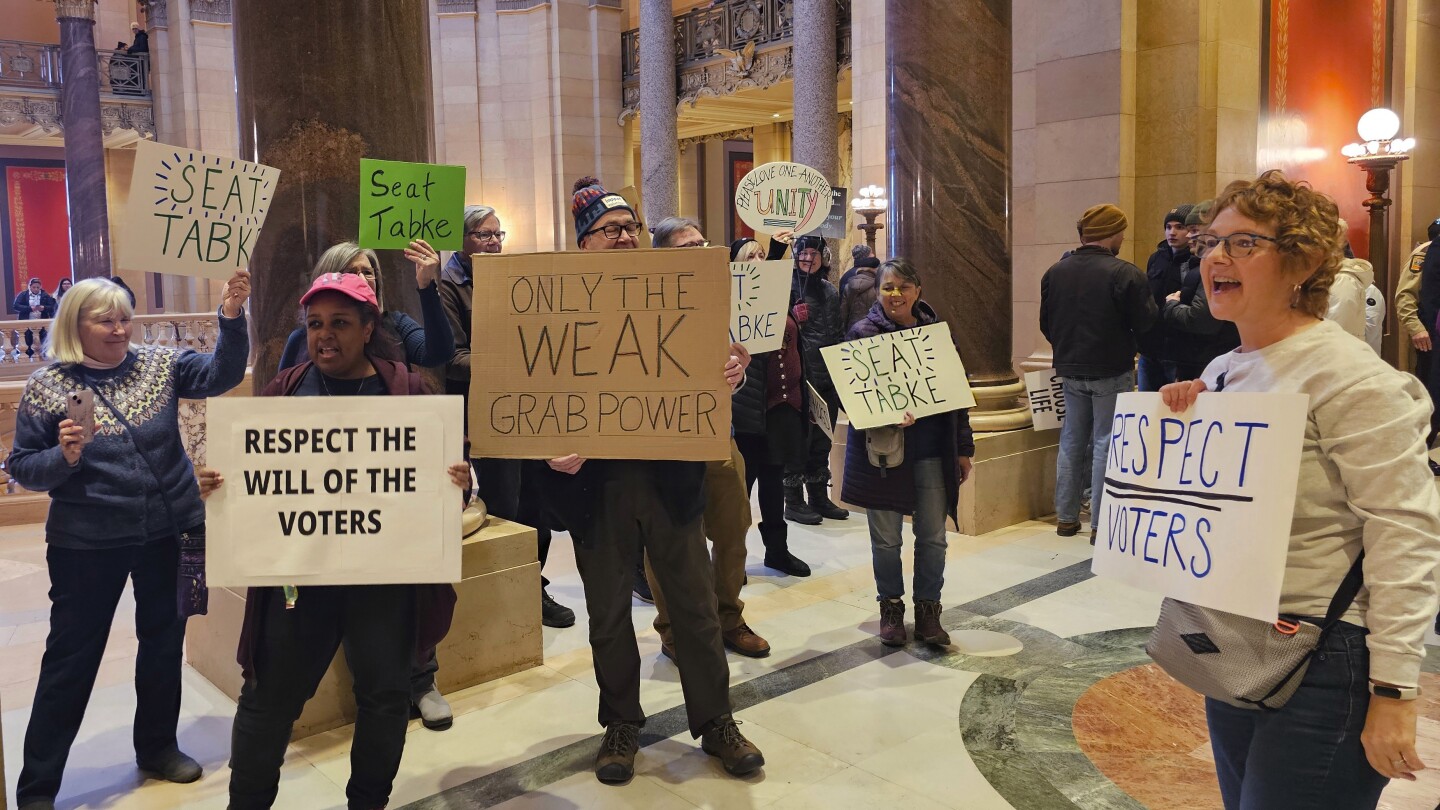
House Democrats remain committed to their absence until Republicans recommit to the previous power-sharing deal and agree not to challenge Democratic Rep. Brad Tabke’s narrow election victory in a district where a low-turnout special election could favor Republicans. Republicans have withheld such assurances despite a judicial ruling affirming Tabke’s win.
Top Democrat Melissa Hortman acknowledged the limitations of current rules, admitting that enforcement of attendance remains largely symbolic, with no real authority to compel lawmakers back to the Capitol.