South Korean Political Turmoil Intensifies with Impeachment of Acting President
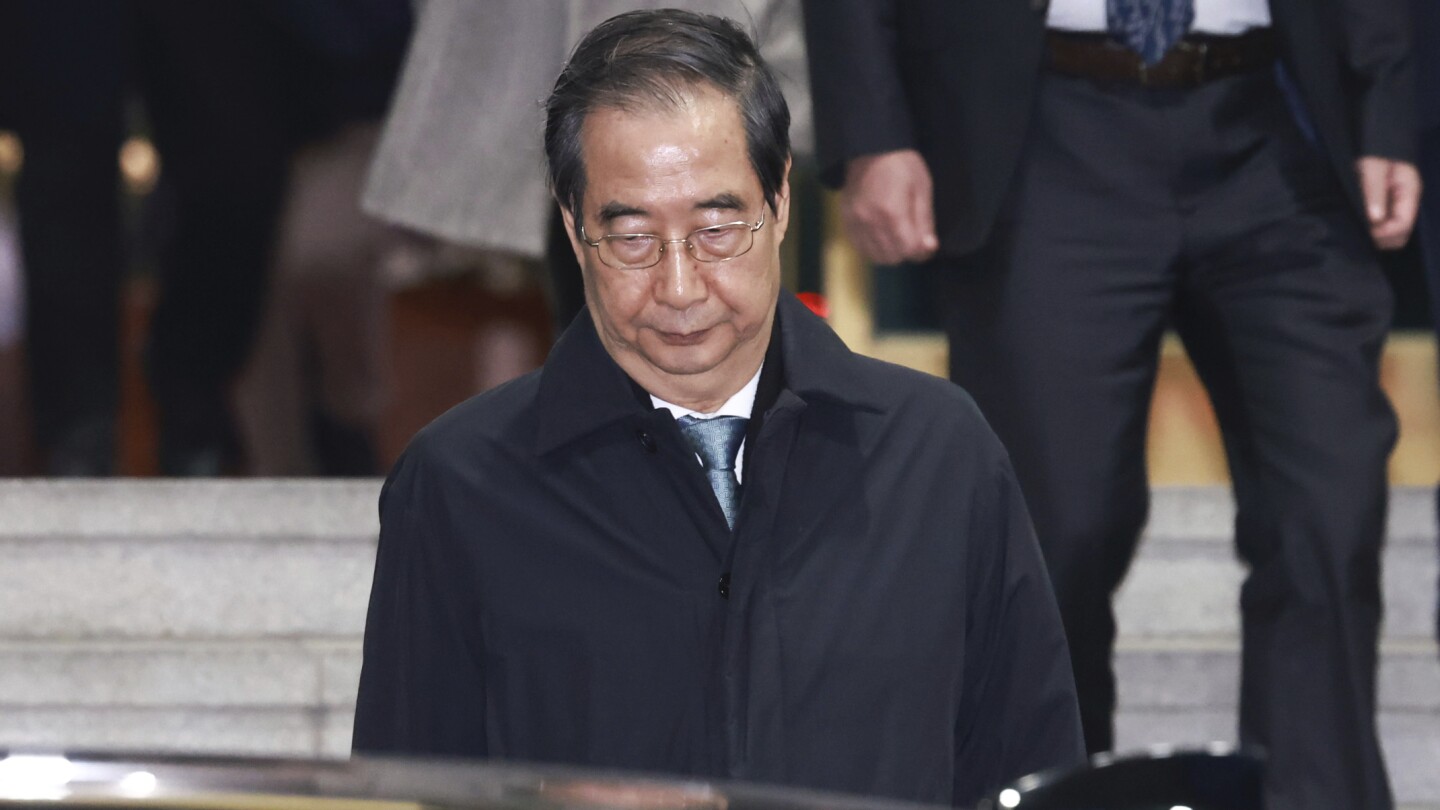
SEOUL, South Korea — In a dramatic turn of events, South Korea’s political landscape has been further destabilized following the impeachment of acting President Han Duck-soo by the National Assembly. The vote, carried out on Friday by the opposition-controlled Assembly, passed with a 192-0 count amid fierce objections from the governing party.
The impeachment strips Han of his presidential duties and powers pending a decision by the Constitutional Court, which is concurrently reviewing the impeachment of President Yoon Suk Yeol. These dual impeachments have exacerbated political discord and economic instability in the country.
The vote was marred by controversy as lawmakers from the People Power Party (PPP) abstained and surrounded Speaker Woo Won Shik, labeling the vote as “invalid” and demanding Woo’s resignation. Despite the uproar, the session proceeded without physical conflict.
Speaker Woo initiated the impeachment vote after clarifying that a simple majority was sufficient for the impeachment of an acting president, contrary to the PPP’s assertion that a two-thirds majority was necessary. While the standard for impeaching a sitting president is a two-thirds vote, such provisions for an acting president remain ambiguous.
In response to the impeachment, Han expressed his disappointment but stated he would honor the assembly’s decision to prevent further confusion. He awaits a “swift, wise decision” from the Constitutional Court.
With Han’s powers suspended, Deputy Prime Minister and Finance Minister Choi Sang-mok has assumed leadership. Choi has since directed the military to heighten readiness to deter potential provocations from North Korea and reassured international partners, including the U.S. and Japan, of the consistency in South Korea’s foreign policy.
Han, initially appointed as prime minister by President Yoon, assumed the acting presidency following Yoon’s impeachment related to his brief imposition of martial law on December 3. Han’s tenure saw immediate friction with the main opposition Democratic Party over issues such as judicial appointments and legislative initiatives.
A core issue is the Democratic Party’s insistence on appointing three new justices to the Constitutional Court, a move they argue is essential for a fair ruling on Yoon’s impeachment. The governing party, however, opposes these appointments, asserting that Han should not exercise presidential authority until Yoon’s impeachment is conclusively resolved.
On Thursday, Han declared he would not proceed with judicial appointments without bipartisan agreement. This statement was followed by the Democratic Party’s submission of the impeachment motion and the passage of bills advocating for the new justices.
Parallel investigations are underway to determine whether President Yoon’s martial law decree constitutes rebellion and abuse of power. Yoon has declined to participate in questioning by investigators. Meanwhile, several of Yoon’s associates, including his defense minister, have faced arrest for their roles in the controversial martial law enactment, which led to a standoff at the National Assembly.
Reports from local media suggest that former Defense Minister Kim Yong Hyun has been indicted for his involvement in the plot, marking the first formal charges in this affair. Attempts to reach the Seoul prosecutors’ office for comments were unsuccessful.
The impeachment motion against Han accuses him of aiding Yoon’s martial law declaration and obstructing efforts to restore the Constitutional Court’s full operations. It further alleges his reluctance to appoint independent investigators into Yoon’s actions.
The martial law, although brief, lasting only six hours, has left lasting impacts, unsettling South Korea’s political scene and causing concern among neighboring countries. President Yoon has defended his actions as a necessary governmental measure, criticizing the Democratic Party for using its legislative majority to hinder his policies.