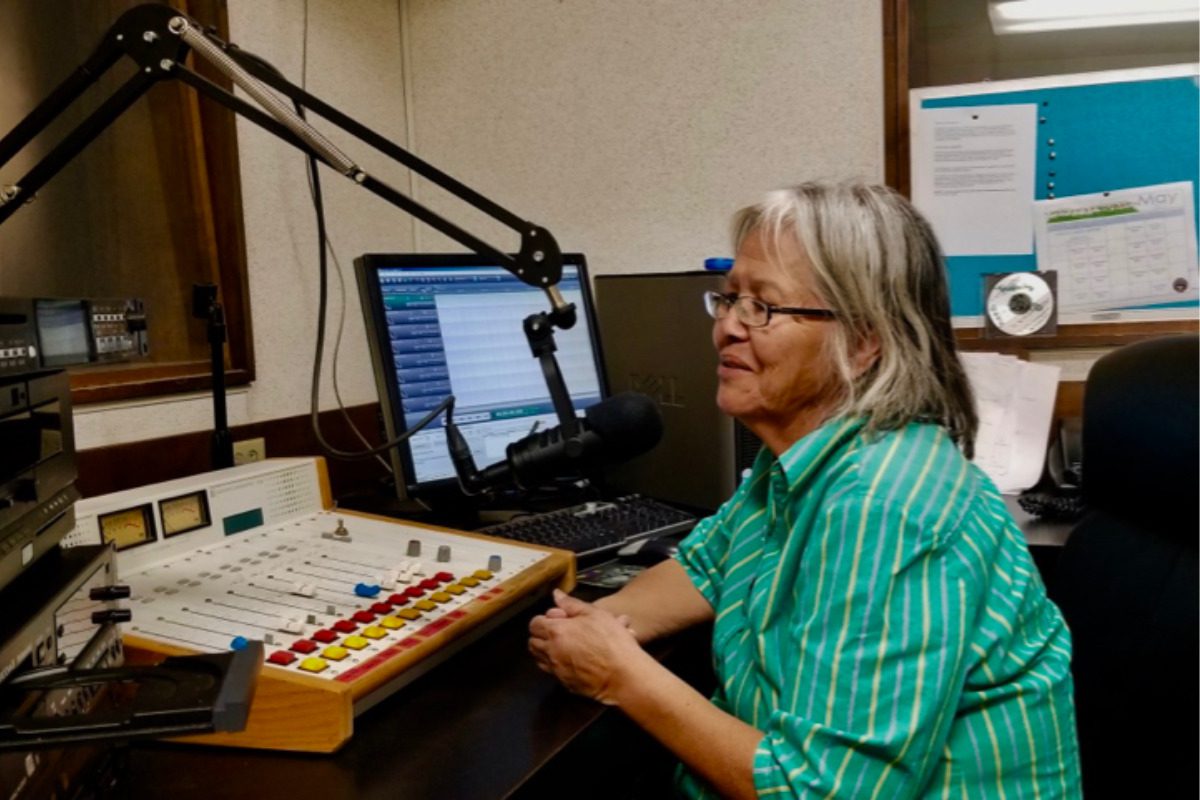
Impact of Proposed Cuts on Arizona’s Public Media
The incoming Trump administration has announced plans to eliminate federal funding for public media, a move that could potentially threaten the existence of numerous rural radio stations throughout Arizona. These cuts are aimed at the Corporation for Public Broadcasting (CPB), which provides essential financial support to local radio and television stations.
Figures such as Elon Musk and US Rep. Juan Ciscomani, R-Tucson, have expressed support for the reduction in funding. While national outlets like PBS and NPR are often the face of public broadcasting, it’s the smaller, locally-run stations that stand to suffer the most from these changes.
Rural Stations at Risk
Dave Riek, manager of KAWC and KOFA in Yuma, emphasizes the value of CPB funding as an investment in rural communities. These stations, operating out of Arizona Western College, offer not only important news services but also hands-on job training for students interested in broadcasting.
Riek explains, “The amount of money that the federal government put into CPB, I think, last year was $500 million. The value of those stations and the content that we are generating, the service we provide to communities, is worth probably ten times that.” He notes that federal grants make up about 25% of KAWC’s budget, and a cut would force significant downsizing.
The Cultural and Educational Role of Public Media
For larger stations like Arizona PBS and KJZZ/KBAQ, the impact of losing federal funding would be less severe, thanks to substantial private donations. However, smaller stations like KGHR in Tuba City depend heavily on CPB grants, constituting 72% of their funding. These stations play a critical role in providing news, emergency information, and cultural programming to Tribal nations in Arizona.
Stations like KNNB in Whiteriver, which broadcasts in the Western Apache language, are vital for cultural preservation. Losing funding could undermine efforts to keep native languages alive.
Potential State Intervention
State Representative Mariana Sandoval from Arizona’s 23rd Legislative District warns that the closure of these stations would be devastating for rural areas with limited access to other news sources. The Federal Communications Commission (FCC) reserves certain frequencies for noncommercial stations, which are crucial in regions lacking stable internet or television service.
Sandoval suggests that the state could potentially step in to fill the funding void, possibly through additional educational funding or state-based broadcasting grants. However, given the Republican majority in the state legislature, such initiatives may face significant hurdles.
Challenges and Concerns
Sandoval views the threats to public media as part of a broader attack on journalism and free speech. The proposed Project 2025 outlines strategies for the Trump administration to exert control over public broadcasting, potentially replacing critical journalism with biased programming.
Riek remains firm in his stance against government-directed programming, stating, “I don’t think we would ever get involved with somebody who was making demands like that.” The future of public media in Arizona remains uncertain as these developments unfold.